THEATRICS, NON-ISSUES & DISRUPTIONS WILL LEAD NOWHERE

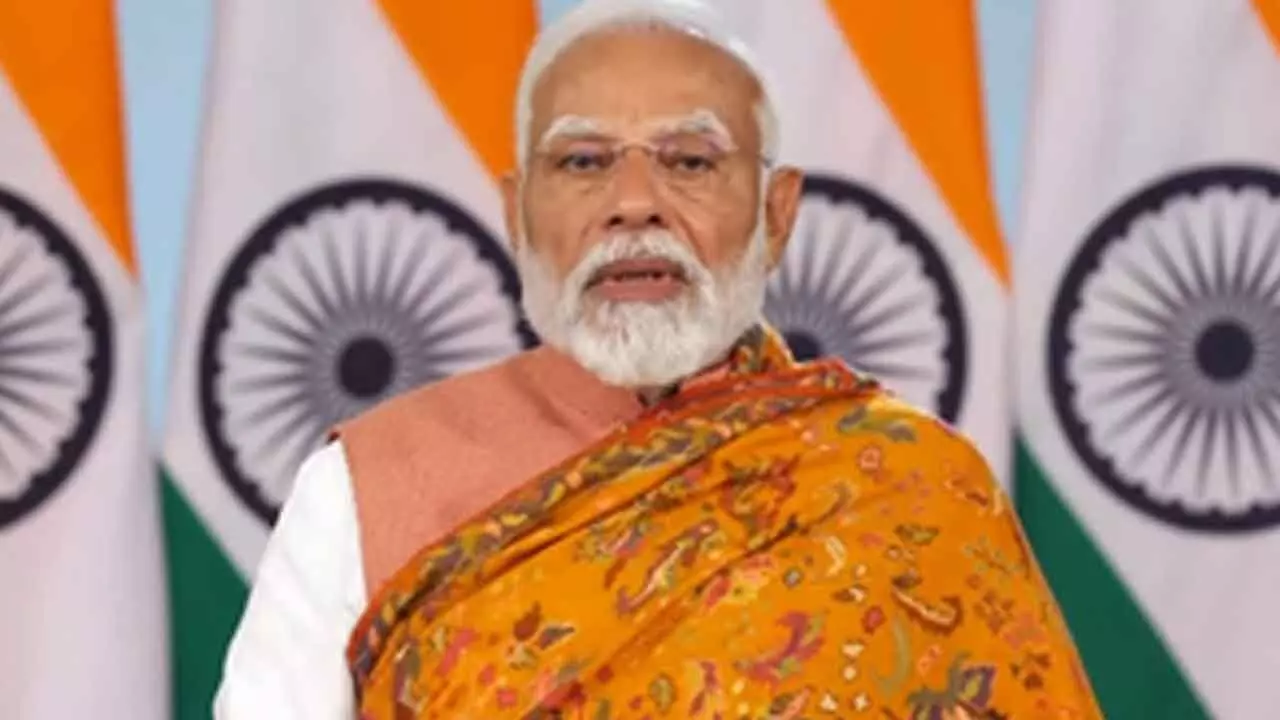
‘Tikega wahi jo zameen se juda rahega’ (Only those who show results on the ground and align with people’s aspirations will survive) was a highly apt remark made by Prime Minister Narendra Modi on Saturday.
‘Tikega wahi jo zameen se juda rahega’ (Only those who show results on the ground and align with people’s aspirations will survive) was a highly apt remark made by Prime Minister Narendra Modi on Saturday. Unfortunately, political parties like the Congress, its INDIA bloc allies, and some regional parties such as the BRS in Telangana and the YSRCP in Andhra Pradesh still believe they can return to power by spreading negativity, offering populist freebies without concern for revenue generation, and ignoring the economic consequences.
Rather than accepting the people’s verdict, engaging in constructive criticism, and presenting facts to challenge the ruling party, these opposition parties prefer disruptive tactics. Their strategy often involves raising issues that have already been officially clarified, creating chaos in Parliament or Assembly, staging walkouts, and resorting to abusive language against rivals. Many of their challenges lack substance and feasibility.
It has become a trend to hurt Hindu sentiments and use legislative platforms not for discussion, debate, or problem-solving but as stages for protests. The Congress party, which failed to find substantial issues to trigger protests in Parliament during Budget session, now seeks to mobilise support within the INDIA bloc for a demonstration demanding a caste census. This raises questions about whether the bloc has a structured agenda or policy.
In 1977, when the Janata Party was officially launched on January 23 to challenge Indira Gandhi’s Congress during the Emergency, various parties – Janata Morcha, Charan Singh’s Bharatiya Lok Dal, Swatantra Party, the Socialist Party of India led by Raj Narain and George Fernandes, and the Bharatiya Jana Sangh (BJS) – united by dissolving their individual identities. Their primary objective was to defeat the Congress, and the hardships endured during the Emergency, along with the leadership of Jayaprakash Narayan, played a crucial role in their success.
However, such unity is absent within the INDIA bloc. Member parties frequently criticise one another and fail to contest state elections together, as seen in Delhi, where the TMC backed AAP while Congress contested separately. Yet, when it comes to creating disorder, they unite. This lack of coherence confuses voters, who struggle to trust these parties.
A healthy democracy requires both the ruling party and the opposition to stay connected with the people, ensuring proper checks and balances. In the past, opposition parties conducted thorough research, informed the public, and effectively debated issues in legislatures and Parliament. There were instances where governments had to resign when they failed to substantiate their claims. If disruptions occurred, the Speaker would promptly convene meetings with opposition leaders to resolve issues and ensure smooth legislative proceedings.
Today, opposition lawmakers prioritise generating noise, while the ruling party capitalises on this by adjourning proceedings. Instead of engaging in meaningful discussions, opposition members resort to theatrics outside the Parliament or Assembly, believing they have accomplished something significant. It is high time for major reforms to ensure that both the ruling and opposition parties work with genuine conviction rather than out of compulsion.