Hyderabad Haleem: Origin and Popularity of Dish During Ramadan

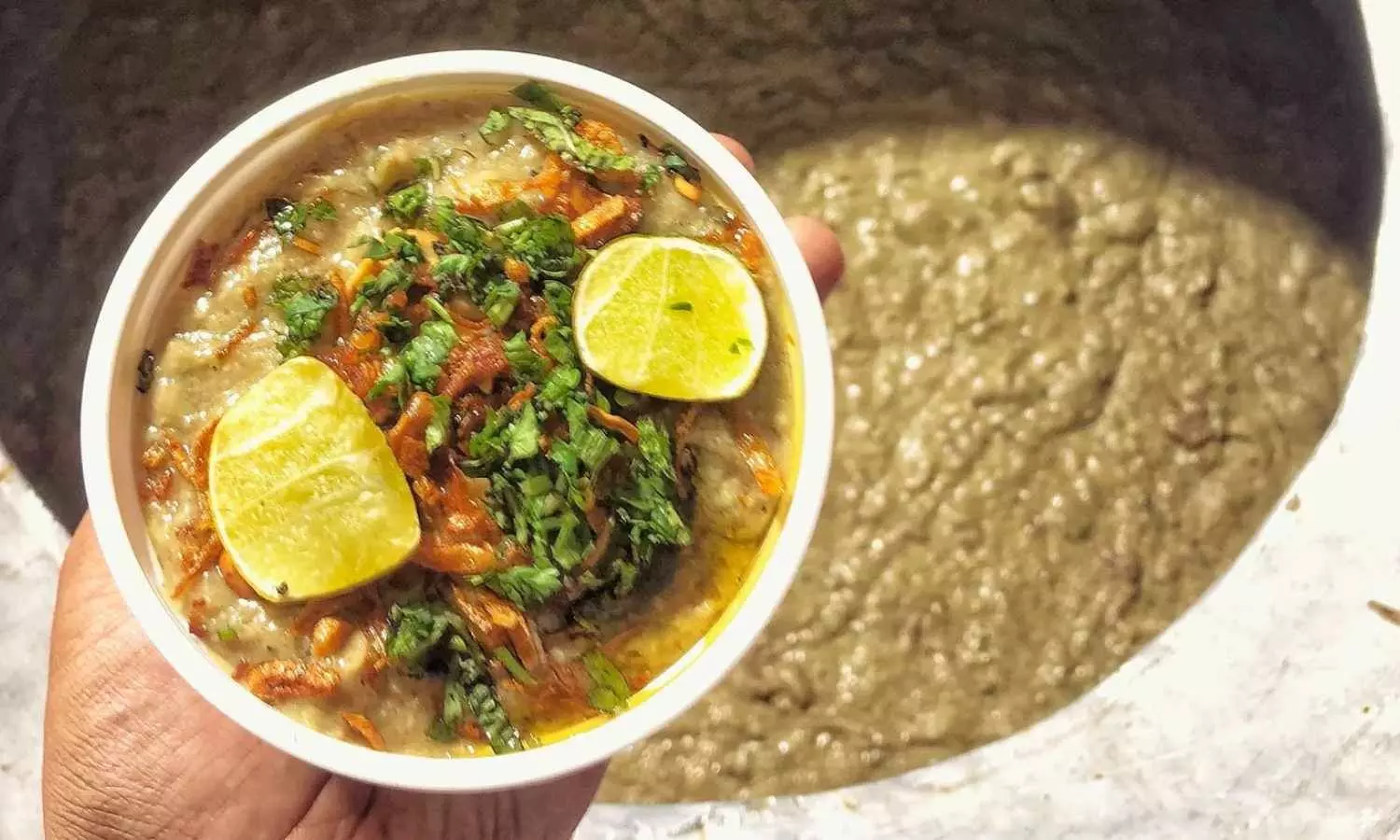
Hyderabad Haleem: Origin and Popularity of Dish During Ramadan
Discover the rich history of Hyderabad Haleem, a dish introduced by Arab soldiers and settlers and popularized by Saif Nawaz Jung in the Nizam's court.
When Ramadan arrives, the first food that comes to mind for food lovers is Haleem. This rich, flavorful dish is especially loved in Hyderabad. But have you ever wondered how Haleem made its way to Hyderabad? Who first prepared it? Let’s dive into its fascinating history.
Haleem was brought to Hyderabad by Arab soldiers in the Nizam’s army and Arab and Persian settlers. Saif Nawaz Jung from Yemen, who worked in the Nizam's court, popularized the dish by serving it at banquets. It quickly became a favorite of both the Nizam and the people of Hyderabad.
Historians trace the origins of Haleem in Hyderabad to Arab soldiers who joined the Nizam of Hyderabad’s army and Arab and Persian settlers in the city. The dish was popularized by Saif Nawaz Jung from Hadhramaut (now part of Yemen), who worked in the Nizam's court. He would prepare Haleem and serve it to guests at banquets. This tradition soon became a favorite among the Nizam’s court and the people of Hyderabad.
Haleem was mentioned in a cookbook as early as the 10th century. Abu Muhammad Al Muzaffar Ibn Sayyar, who wrote a book on Baghdad cuisine, referred to it as "Haris." You can still taste this ancient version of Haris today in Barkas, Hyderabad.
In the 1950s, Haleem was called "Haris" during Ramadan. Madina Hotel in Pattargatti was the first to serve it publicly. Later, other hotels like Shadab, Nayab, and Paradise joined in. As its popularity grew, local spices were added, giving Hyderabad Haleem its unique flavor and making it a city icon.
In 2010, it was granted Geographical Indication (GI) status, a significant recognition for a meat-based dish in India
It is also popular in Aurangabad, Maharashtra, the Nizams' first capital.