
Antarctica’s Under-Ice World Mapped in Unprecedented Detail

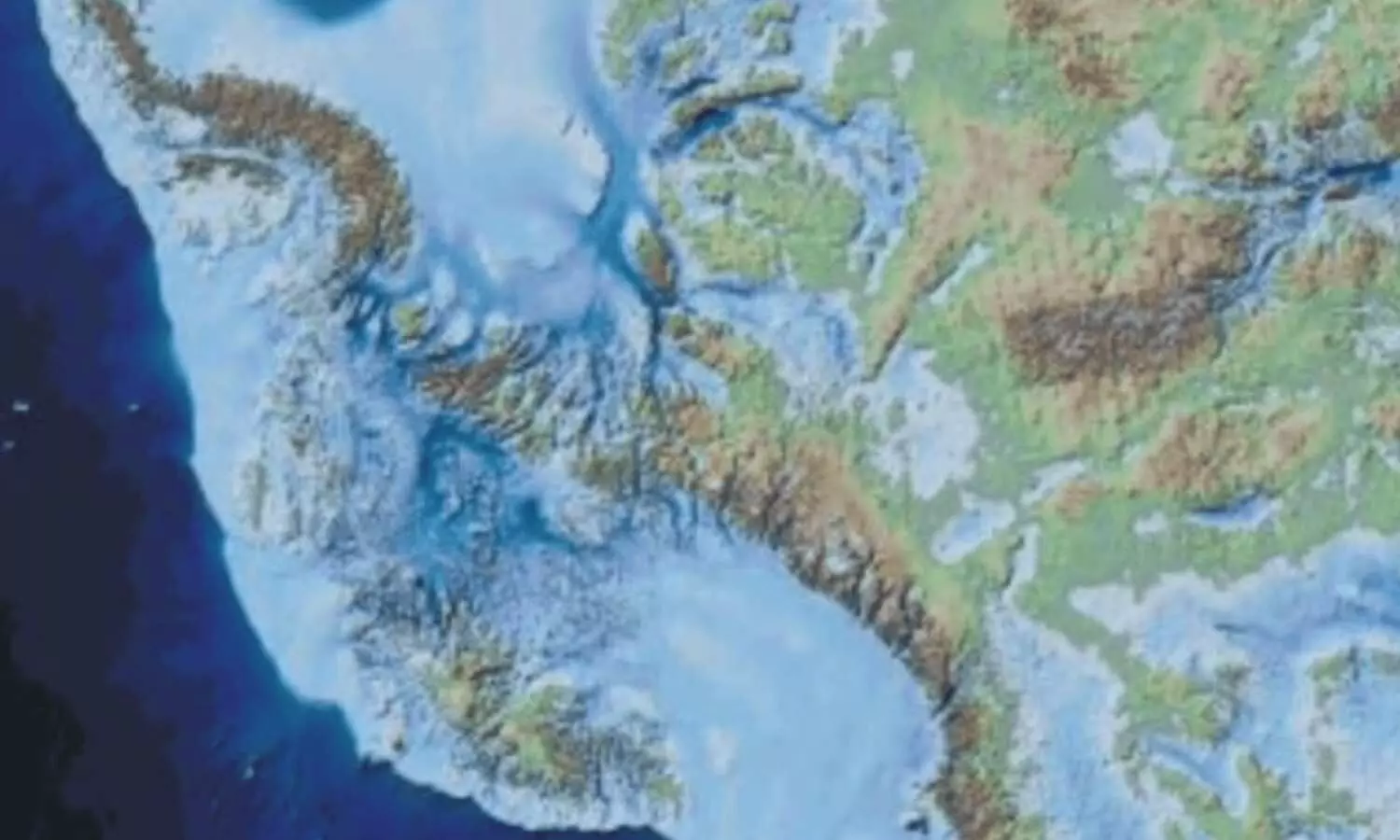
Antarctica’s Under-Ice World Mapped in Unprecedented Detail
Bedmap3 unveils Antarctica’s subglacial landscape, mapping ice depth, terrain, and ocean interactions to advance climate research and sea-level predictions.
A groundbreaking map revealing Antarctica’s concealed landscape beneath its vast ice cover has been introduced by the British Antarctic Survey (BAS). Named Bedmap3, this latest dataset provides the most intricate depiction yet of the continent’s subglacial terrain, integrating over 60 years of survey data from multiple institutions.
Bedmap3 enhances understanding of the frozen continent by compiling information from satellites, airborne sensors, ship-based studies, and even dog-drawn sled expeditions. Spanning 52 million data points at a 500-meter grid resolution, the dataset delivers unprecedented insights into Antarctica’s topography as if its 27 million cubic kilometers of ice were removed.
Scientists have long sought to uncover what lies beneath the thick ice sheet. This map marks a major advancement in Antarctic cartography, refining knowledge of key regions, including East Antarctica near the South Pole, the Antarctic Peninsula, the West Antarctic coastline, and the Transantarctic Mountains. Utilizing radar, seismic reflection, and gravity measurements, researchers have constructed a high-resolution visualization of the continent’s hidden structure.
Among the key findings, the thickest ice formation—measuring 4,757 meters—was identified in an unnamed canyon within Wilkes Land. The Antarctic ice sheet, covering approximately 13.63 million square kilometers with an average thickness of 1,948 meters, is now mapped with unprecedented clarity. These details provide valuable data on ice flow, ocean interactions, and potential sea-level changes.
Bedmap3 builds on the previous Bedmap1 and Bedmap2 projects, improving accuracy and offering critical insights into how Antarctica’s ice responds to climate variations. The findings will aid researchers in evaluating the continent’s geological history and forecasting its role in future climate change scenarios.


