Kerala Temples Replace Real Elephants with Robotic Versions to Promote Cruelty-Free Traditions

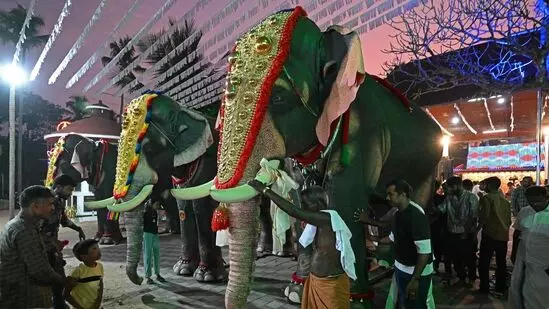
Kerala temples are replacing real elephants with robotic versions to promote cruelty-free traditions, ensuring safety and protecting endangered species.
In a groundbreaking shift, several temples in Kerala have begun replacing live elephants with mechanical replicas to ensure a cruelty-free alternative. These life-size robotic elephants, equipped with flapping ears and water-spraying trunks, are helping preserve the tradition while protecting the endangered species.
Crafted from fiberglass and rubber, these mechanical elephants are mounted on wheeled metal frames strong enough to carry a rider, providing a safe and sustainable solution for religious ceremonies. The initiative is being hailed by animal rights activists as a progressive step toward reducing the exploitation of elephants, which are often subjected to severe physical and psychological stress when kept in captivity.
A Humane Alternative to Captivity
Elephants are integral to many Hindu temple rituals in Kerala, where they are paraded through large crowds amid loud music and flashing lights. However, incidents of elephants becoming spooked and causing deadly stampedes have raised concerns. In February alone, PETA recorded several incidents where captive elephants lost control, resulting in fatalities and injuries.
Former temple official C.G. Prakash, who helped introduce robotic elephants at the Chakkamparambu Bhagavathy temple, believes this shift will protect both elephants and worshippers. "It’s totally unethical to capture and torture wild animals. They belong in the jungle," he said.
Support from PETA and the Voice for Asian Elephants Society
PETA India has supported the shift by donating several robotic elephants to temples, provided they send their real elephants to sanctuaries. According to PETA's Khushboo Gupta, the models preserve traditional customs in a modern, cruelty-free way, ensuring that elephants can remain with their herds in their natural habitats.
The mechanical elephants are dressed in golden headdresses and garlands, resembling real elephants in ceremonial attire. The more advanced models, complete with electric motors for lifelike movement, can cost over $5,500, though simpler versions are also available.
A Safer Solution
Robotic elephants are also seen as a safer alternative to live animals, as they eliminate the risks of accidents caused by panicked elephants. In Kerala alone, there were multiple incidents of elephants losing control, including one tragic stampede caused by fireworks at a festival, which killed three people.
V.K. Venkitachalam, from the Heritage Animal Task Force, emphasized the importance of following proper regulations for the care of elephants, warning that many are not treated according to guidelines.
Legal and Ethical Considerations
Kerala’s High Court issued new guidelines for the ethical treatment of captive elephants in November 2024, though these were temporarily blocked by the Supreme Court. Animal rights groups argue that the models fit perfectly with the Hindu principle of ahimsa (non-violence) and offer a compassionate solution to the exploitation of real elephants.
The use of robotic elephants also aligns with efforts to protect the endangered species. There are fewer than 50,000 wild Asian elephants, with the majority residing in India. Human-elephant conflict has become a growing issue, with hundreds of human fatalities each year, as well as the deaths of elephants due to poaching, habitat loss, and accidents.
For some worshippers, the mechanical elephants offer peace of mind. "When there’s a live elephant, there’s always a fear of it running amok," said teacher Jayasree Sivaraman Narayaneeya. The move to robotic elephants promises to preserve both tradition and the well-being of these majestic creatures.