Pioneering Healthcare Innovation Accelerates Life-Saving Treatments from Decade to Two Years

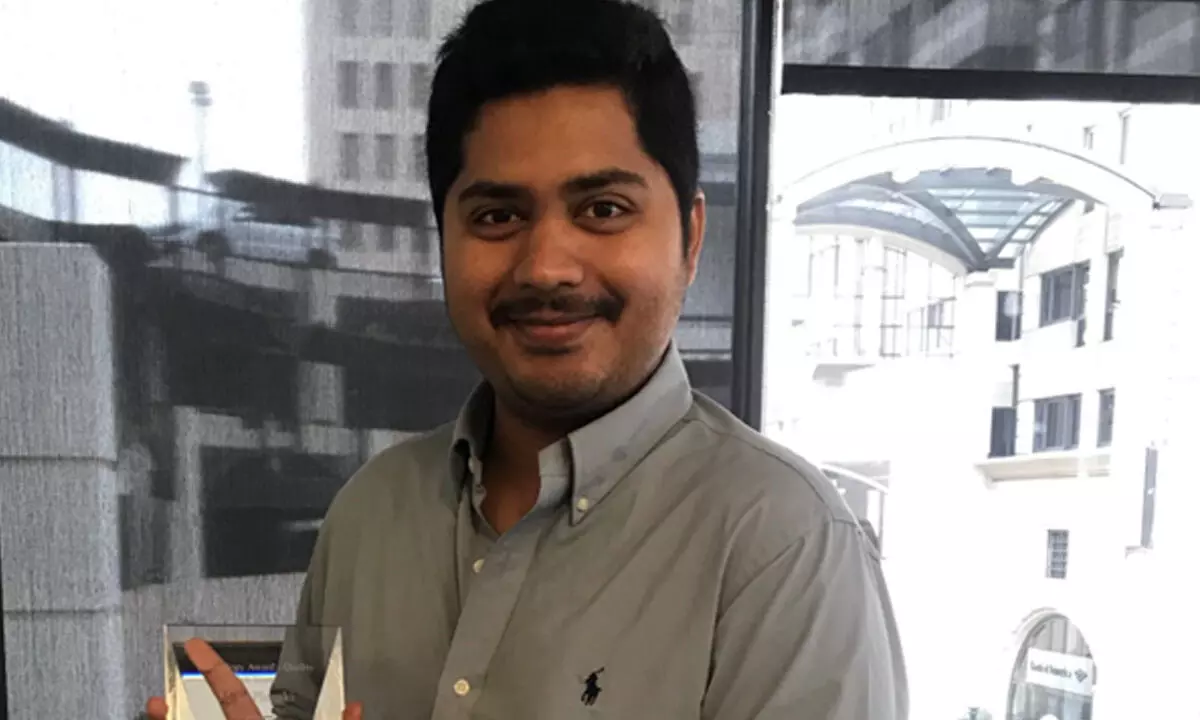
In the rapidly evolving landscape of pharmaceutical research, decentralized clinical trials (DCTs) are redefining how new drugs are tested and approved. At the core of this transformation is a powerful digital platform ensuring global compliance, speed, and precision. Driving these innovations is Rohit Singh Raja, whose quality engineering leadership is helping life-saving treatments reach patients faster than ever before
In the quiet yet high-stakes corridors of pharmaceutical innovation, a silent revolution is underway. Decentralized Clinical Trials (DCT), once a novel idea, are rapidly becoming the cornerstone of how drugs are tested and approved in today’s globally connected world. At the heart of this shift lies a robust, quality-assured platform that has enabled the world’s top 50 pharmaceutical giants to conduct remote, regulation-compliant clinical research across borders.
Reportedly, this transformation is not just a story of innovation but of grit, precision, and technology-led diligence. Rohit Singh Raja, Associate Director of Quality Engineering, plays a pivotal role in ensuring the safety, reliability, and quality of one of the most advanced DCT platforms in use today.
“What used to take a decade in the early 2010s is now getting accomplished in just two years,” says Raja. “Thanks to decentralized platforms, we’re removing geographic and logistical barriers from clinical trials. Anyone with a smartphone or a provisioned device can now participate.”
This shift, experts note, is not merely technological but transformational. With globally distributed servers across the U.S., Canada, the EU, Australia, Japan, China, and Brazil, the platform Raja oversees is among the very few that can adhere to regulatory frameworks of multiple jurisdictions without compromise.
“Maintaining compliance with global regulations isn’t just challenging, it's a daily battle,” he explains. “But it’s also what sets our platform apart.”
As per internal reports, one of the landmark changes introduced under Raja’s leadership has been the dramatic acceleration of the platform’s release cycle. Previously, regression testing consumed five full business days; now, thanks to end-to-end automation, it takes just seven hours.
“We automated the regression suite for both Web UI and Mobile,” Raja says. “That allowed us to reduce release time from five days to two, without compromising on quality. That’s a 60% reduction in turnaround time.”
The impact of these initiatives, coming from the expert’s table, is far from anecdotal. By automating 83% of UI test cases using AccelQ, Playwright, and Java and 78% of mobile test cases using Appium on Browserstack Raja and his team have eliminated 60% of manual effort typically required in routine testing.
“These weren’t just improvements,” says an internal technical report. “They were step-changes in productivity and reliability.”
The results of Raja’s initiatives are measurable and, more importantly, replicable. According to internal estimates, the automation and streamlined QA practices have saved the company $1.2 million annually. Moreover, by reducing the release cycle from four weeks to three, the platform now facilitates four additional feature rollouts every year, an enormous advantage in a sector where speed and precision can influence lives.
Additionally, Raja established and enforced new SOPs, QA policies, and best practices aligned with Good Clinical Practice (GCP). This led to a 35% improvement in defect detection across the board, enhancing not just the efficiency but the credibility of the trial data submitted to regulatory bodies like the U.S. FDA.
“We’re not just shipping faster,” Raja notes. “We’re shipping better.”
The scale of work demanded more than just engineering; it required pioneering spirit. Implementing a unified automation framework using Playwright, Selenium, and Java wasn’t a simple lift-and-shift. These systems were intricately tailored to accommodate evolving business logic, legacy constraints, and modern agile practices.
“When we started, the idea of bringing automation to this scale across web, mobile, APIs was seen as overly ambitious,” Raja recalls. “But we built it piece by piece, with accuracy as our north star.”
Furthermore, his enhancement of mobile test automation using Appium helped reduce defect leakage by 30%, a figure lauded internally as "remarkable" in the context of complex, distributed software ecosystems.
Looking ahead, Raja envisions a platform that leverages AI-powered self-healing automation technology that autonomously corrects failing scripts without human intervention. This innovation, he argues, could be the key to unlocking even faster and more reliable testing cycles.
“Imagine cutting recovery time for failed test scripts from hours to minutes,” he says. “That’s the frontier we’re preparing for.”
As per emerging trends in the industry, such AI-integrated automation frameworks are likely to define the next era of clinical trial management, particularly as trial protocols become more complex and timelines become more compressed.
In addition to his practical contributions, Raja has shared his insights through scholarly publications. His authored article titled “Digital Tools in Decentralized Clinical Trials: eConsent, Electronic Data Capture, ePRO, and Related Technologies” outlines the foundational technologies enabling DCTs to operate at scale. The paper, according to peer reviews, offers both strategic and technical guidance for organizations navigating the transition to digital trials.
In a world where life-saving medications often hang in the balance of timelines and data fidelity, the work done by professionals like Rohit Singh Raja becomes indispensable. From global compliance to automation excellence, the scaffolding of modern clinical research rests on systems built not just to function but to endure, adapt, and accelerate.
“We’re making it possible for innovation to move at the speed of need,” Raja concludes. “That’s the responsibility and the reward of being in this field.”