
Nvidia Unveils Cosmos Reason AI to Give Robots Human-Like Thinking and Planning Skills

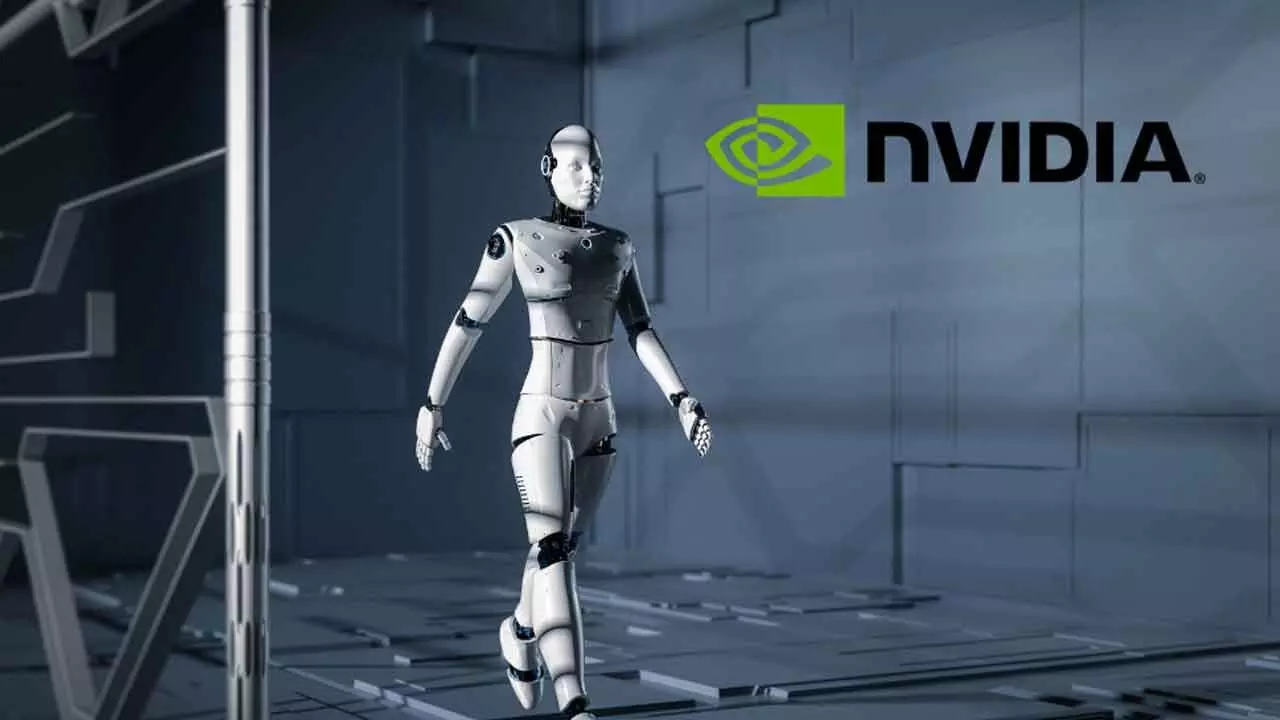
Nvidia’s Cosmos Reason AI aims to equip robots with human-like reasoning, enabling smarter decisions, better planning, and real-world adaptability.
Nvidia has taken a bold step toward the future of robotics with the introduction of Cosmos Reason AI, a next-generation reasoning vision language model (VLM) built to help robots think, plan, and act more like humans in the physical world.
The 7-billion-parameter open and customizable model is tailored specifically for physical-world AI and robotics, offering far more than traditional VLMs. According to Nvidia, while models like OpenAI’s CLIP excel at identifying objects and patterns, they often struggle with complex or ambiguous instructions. Cosmos Reason aims to bridge that gap by incorporating prior knowledge, physics-based understanding, and common sense reasoning—skills crucial for breaking down tricky commands into smaller steps, adapting to unfamiliar surroundings, and making deliberate, methodical choices.
“By combining AI reasoning with scalable, physically accurate simulation, we’re enabling developers to build tomorrow’s robots and autonomous vehicles that will transform trillions of dollars in industries,” said Rev Lebaredian, vice president of Omniverse and simulation technologies at Nvidia.
Real-World Uses and Early Adoption
The company says Cosmos Reason can handle a range of tasks including data curation and annotation, robot planning and reasoning, and video analytics. For instance, it could help automate the labeling of massive, varied datasets, serve as a robot’s “brain” integrating vision, language, and actions, or process huge volumes of video to extract insights or detect problems.
Already, Nvidia’s robotics and DRIVE teams are employing the technology for training data filtering and annotation. Major companies such as Uber, Magna, VAST Data, Milestone Systems, and Linker Vision are exploring its potential for applications like autonomous driving, delivery robots, traffic monitoring, industrial inspection, and safety enhancements. Nvidia notes that in autonomous vehicles, Cosmos Reason could add “world understanding” to improve trajectory planning.
Part of a Larger AI Ecosystem
Cosmos Reason has been developed alongside Nvidia’s Cosmos world foundation models (WFMs), which have been downloaded more than two million times. Alongside this launch, Nvidia introduced Cosmos Transfer-2, an upgraded synthetic data platform that streamlines photorealistic 3D scene creation. This improvement reduces the process from 70 steps to just one, enabling much faster AI training using Nvidia RTX PRO servers.
Simulation and Hardware Boosts
To support the new AI model, Nvidia has also rolled out updates to its Omniverse simulation platform, adding SDKs and libraries for industrial AI and robotics. New features include interoperability between MuJoCo (MJCF) and Universal Scene Description (OpenUSD), plus Omniverse NuRec libraries for 3D Gaussian splatting.
In robotics simulation, Isaac Sim 5.0 and Isaac Lab 2.2—now open source on GitHub—come with integrated NuRec rendering. These tools are already being linked with simulators like CARLA for autonomous vehicle testing.
On the hardware side, Nvidia unveiled RTX PRO Blackwell Servers, designed to handle unified robot development workloads, and expanded DGX Cloud availability on Microsoft Azure Marketplace for Omniverse developers.
With Cosmos Reason AI, Nvidia is not just teaching robots to “see” the world—it’s training them to truly understand and navigate it with intelligence and adaptability.


